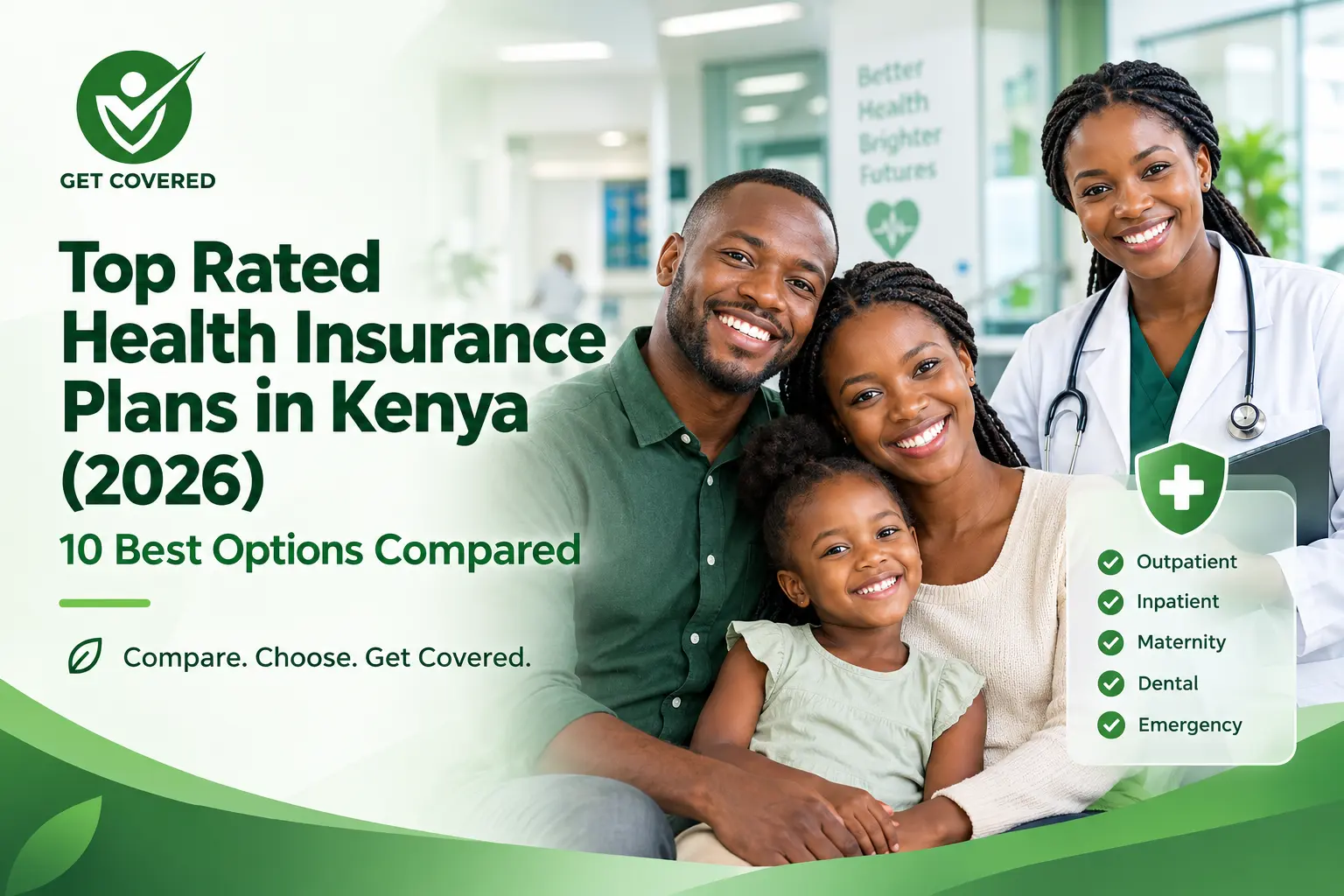
Best Health Insurance in Kenya 2026: How to Choose and Avoid Hidden Traps!
Imagine you are sitting at a hospital reception desk in Nairobi at 2 AM with a family emergency. You hand over your medical card, confident that you’ve been paying your monthly premiums on time. Then, the receptionist looks at the screen, looks back at you, and says, "Sorry, your insurer has rejected this claim on a technicality."
This is the ultimate medical insurance nightmare, and unfortunately, it happens to thousands of Kenyans every single year.
Navigating the shifting Kenyan medical insurance landscape—especially with the latest public healthcare updates and private cover changes—can feel completely overwhelming. In this comprehensive guide, we are breaking down honest, transparent advice to help you find affordable private medical covers, optimize your protection portfolio, and avoid the hidden policy traps designed to take your cash flow.
1. The Protection Portfolio: The Financial Foundation Most Kenyans Skip
Before looking at specific numbers, we need to correct a massive financial mistake most Kenyans make: spending 100% of their energy on wealth building.
It is easy to get hyper-focused on saving in Money Market Funds (MMFs), buying government bonds, or planning for real estate investments. While that is amazing for your net worth, wealth building is only one half of financial planning. The other half is your Protection Portfolio.
What happens if you get into a sudden medical emergency without a protection portfolio? You are forced to withdraw from your investments, killing your compound interest and forcing you to start from scratch. A good health insurance policy isn't an expense; it’s a shield for your wealth.
2. Shifting Landscapes: Public Healthcare vs. Private Covers in Kenya
Right now, there is massive confusion across the country regarding our public healthcare shifts. If you are self-employed, a corporate worker, or taking care of your aging parents, relying blindly on a shifting state medical scheme is incredibly risky.
We have all seen the tragic stories online of families suddenly having to pay 40,000 shillings out-of-pocket monthly for critical treatments like dialysis or cancer care because of transitions in public systems. Relying entirely on public systems leaves you vulnerable. To ensure true peace of mind, balancing your healthcare plan with a private cover is no longer optional—it is a necessity.
3. The Real Costs: Budget vs. Premium Customization
The number one thing that keeps Kenyans from getting medical cover is pure fear of the cost. Many assume private medical insurance automatically costs 200,000 or 300,000 shillings a year.
But here is the truth: private covers can accommodate almost any wallet if you know how to customize them. Look at how the market is generally structured:
Cover Type | Estimated Cost (Per Year) | What it Typically Includes
Budget Inpatient | From ~Ksh 6,200 / year | Hospital admissions, surgeries, and major emergencies.
Budget Inpatient + Outpatient | Ksh 20,000 – Ksh 25,000 / year | Inpatient care + day-to-day clinic visits, doctor consultations, and medication.
Comprehensive Premium | Ksh 30,000 – Ksh 80,000+ / year | Extensive inpatient/outpatient limits, maternity, dental, optical, and international referral options.
Budget Inpatient | From ~Ksh 6,200 / year | Hospital admissions, surgeries, and major emergencies.
Budget Inpatient + Outpatient | Ksh 20,000 – Ksh 25,000 / year | Inpatient care + day-to-day clinic visits, doctor consultations, and medication.
Comprehensive Premium | Ksh 30,000 – Ksh 80,000+ / year | Extensive inpatient/outpatient limits, maternity, dental, optical, and international referral options.
By understanding your specific needs, you can customize your premiums to fit your exact budget without overpaying for benefits you won't use.
4. Unmasking the Traps: Sub-Limits, Waiting Periods & Exclusions
Insurance companies are a business—they have done the math, they understand the risk, and they love their cash flow. They will spend millions on beautiful billboards across Nairobi showing happy families. But you must look past the marketing brochures and read the actual contract.
When buying a policy, you must audit three specific traps:
- Waiting Periods: New policies usually have a 30-day waiting period for illness, a 1-to-2-year waiting period for pre-existing or chronic conditions, and specific timelines for maternity. If you get sick on day 25, your claim will be rejected.
- Sub-Limits: Your total cover might be Ksh 2 Million, but hidden in the fine print is a "Pre-existing condition sub-limit" of Ksh 200,000, or a "Doctor's consultation cap" of Ksh 1,500. If your hospital bill goes above the sub-limit, you pay the difference out of pocket.
- Exclusions: Certain procedures, high-cost experimental drugs, or cosmetic treatments are explicitly excluded from policies.
5. How to Audit and Select Your Provider
Never pick an insurance company just because your friend or colleague uses it. Instead, run your prospective provider through a three-step audit:
- Doctor & Hospital Alignment: Ensure the hospitals closest to you (and the doctors you trust) are actually on the insurer’s active panel.
- Turn-around Time (TAT): How fast does the insurer approve discharge requests? You don’t want to be stuck in a hospital bed for 8 hours after being discharged just waiting for an insurance clearance token.
- The "Black Tax" & Senior Covers: If you are buying a cover for aging parents, look specifically at senior-citizen caps and co-payment clauses, as these terms change drastically once a principal member passes age 60 or 65.
Take Control of Your Protection Strategy Today
Stop playing guessing games with your hard-earned money and risking your family’s safety. If you want to make sure you aren't being ripped off by high premiums, bad sub-limits, or hidden fine print, we want to help you map out your protection strategy.
[Click here to use our Premium Calculator / Quote Request Form] to instantly compare the best medical covers in Kenya and get a transparent, unbiased breakdown tailored specifically to your family's budget and needs.