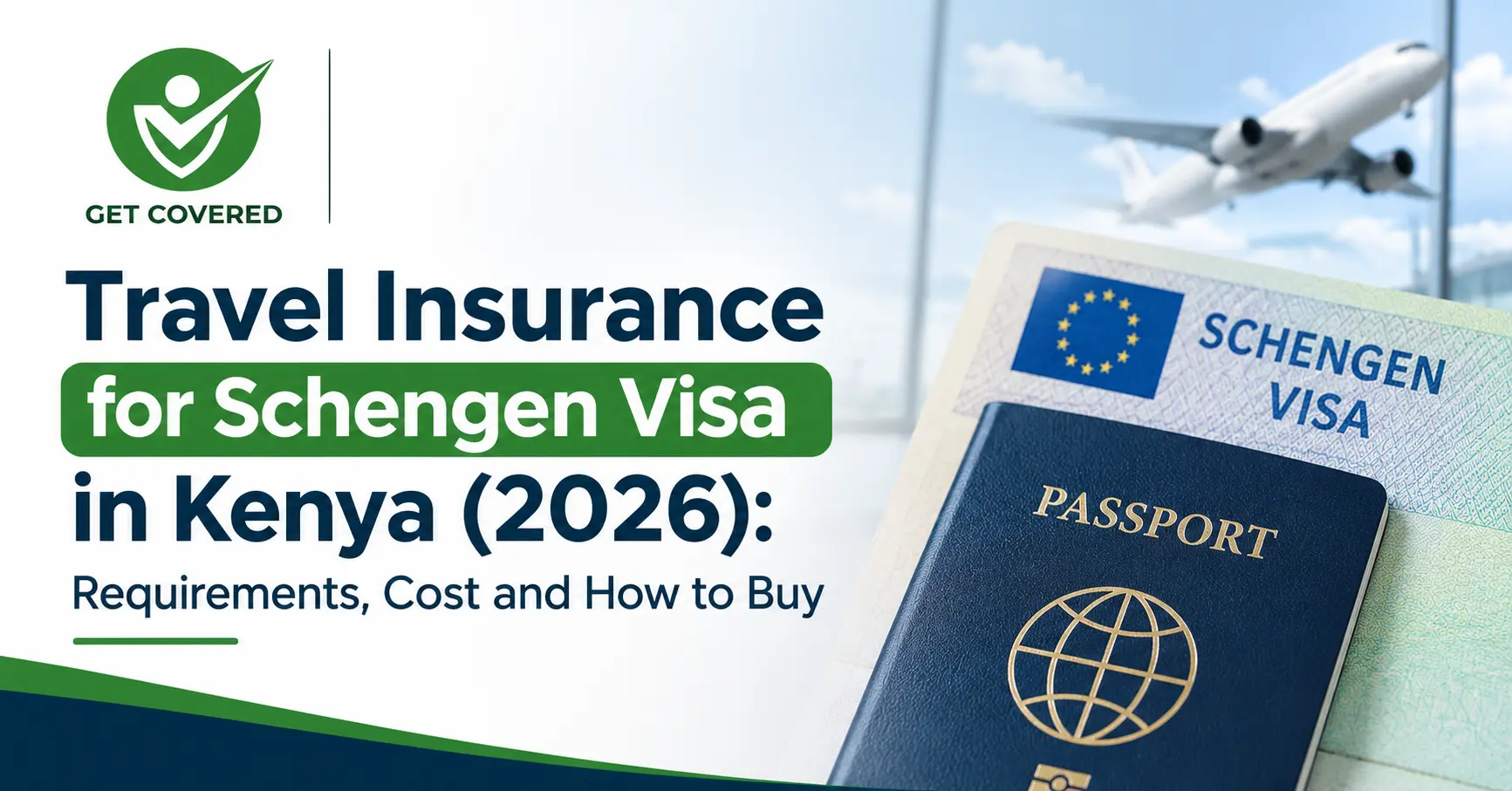
Travel Insurance for Schengen Visa in Kenya (2026): Requirements, Cost and How to Buy
Imagine that you have paid the visa fee, booked your VFS appointment and gathered three months of bank statements. At the counter, the officer turns to the insurance page and notices that the cover ends two days before your return flight.
A document that cost a few thousand shillings can now delay or damage a file that took weeks to prepare.
Here's the thing. Travel insurance is one of the few Schengen visa documents you fully control. Get it right and it quietly supports your application. Get it wrong and it becomes the weakest page in your file.
This guide explains exactly what travel insurance for a Schengen visa must include, what Kenyan consulates look for, how much it costs, how to buy it step by step and which mistakes to avoid.
Quick answer: Travel insurance for a Schengen visa is medical cover of at least €30,000, valid in all Schengen states, for your entire stay. It must cover emergency medical treatment, hospital care and medical repatriation, and it must be bought before you apply. You submit the insurance certificate with your visa application.
Contents
- What is Schengen visa travel insurance?
- Is it mandatory for Kenyans?
- Official requirements, explained
- What Kenyan consulates ask for in practice
- Which policies do not qualify?
- How to buy Schengen travel insurance in Kenya, step by step
- How to set your cover dates
- How much does it cost?
- How to choose a provider
- Cover for students, business travellers, families and seniors
- Single-entry, multiple-entry and annual cover
- What happens if your visa is refused?
- Using your insurance in Europe
- Common mistakes
- Final checklist
- FAQs
What is Schengen visa travel insurance?
Schengen visa travel insurance is travel medical insurance that proves you can pay for medical care while you are in the Schengen Area. It protects the host country from unpaid medical bills, and it protects you from paying them yourself.
It is a visa document, not an optional extra. The rule comes from Article 15 of the EU Visa Code (Regulation (EC) No 810/2009), which consulates in Nairobi apply.
It is also not the same as a general travel insurance policy, although a broader policy can qualify if it meets the same minimums. Medical cover and repatriation are the parts the visa cares about. Baggage, delay and cancellation benefits are extras.
Is travel insurance mandatory for Kenyans applying for a Schengen visa?
Yes. Kenyan passport holders need a visa for short stays in the Schengen Area, and a short-stay visa application must be supported by valid travel medical insurance. Consulates in Nairobi list it in their document checklists.
The Embassy of Italy in Nairobi, for example, lists individual travel medical insurance as a required document in its business visa checklist. The Danish and Swedish missions in Kenya also publish pages telling applicants they must provide proof of cover.
If you are applying for a long-stay national visa or a residence permit, the rules differ. Check with the country you are applying to.
What are the official Schengen travel insurance requirements?
The EU Visa Code sets the baseline. The EU Delegation in Nairobi publishes a form that insurers use to confirm their policies meet it. Together they give this picture.
|
Requirement |
What it means for you |
|---|---|
|
Minimum medical cover of €30,000 |
The policy limit must be at least €30,000 |
|
Valid in the whole Schengen territory |
No country exclusions inside the Schengen Area |
|
Covers your entire stay |
Start date and end date must include every day of your trip |
|
Repatriation for medical reasons |
The policy pays to bring you home when medically necessary |
|
Urgent medical attention |
Covers sudden illness or injury treatment |
|
Emergency hospital treatment |
Covers admission, surgery and related care |
|
Death |
Covers costs linked to death abroad, including repatriation of remains |
|
Claims recoverable in a Schengen state |
You can claim for expenses incurred in the Schengen Area |
|
Refundable if the visa is refused |
The insurer returns the premium without a fee if your visa is refused |
|
15-day grace period |
The EU Delegation form asks insurers to confirm a 15-day grace period under the Visa Code |
Sources: EU Visa Code, Article 15 and the EU Delegation to Kenya medical travel insurance form.
Some insurers and consulates also state that the policy should have no deductible, or that it should cover COVID-19 treatment. These are not stated in the Visa Code itself, so confirm them with the consulate handling your application. [Verify before publishing.]
Business lesson: Treat the €30,000 as a minimum, not a target. A higher limit may protect you better if you fall seriously ill.
What do Kenyan consulates ask for in practice?
The EU rules are the same everywhere, but each consulate adds its own document rules. Always read the checklist of the country you are applying to.
|
Consulate |
What its published guidance says |
|---|---|
|
Italy (Nairobi) |
Insurance must be bought from an insurer in Kenya or the Schengen area, cover the whole stay, show your full name exactly as in your passport, be valid across the Schengen Area, carry at least €30,000 for urgent hospitalisation or repatriation, and bear the insurer's stamp and signature. Only the policy certificate page is required. A letter from an existing medical insurer or employer confirming equivalent cover may be accepted. |
|
Sweden (Nairobi) |
You must provide proof of valid medical travel insurance and carry the certificate during your trip. |
|
Denmark (Nairobi) |
The Danish mission advises making sure the policy dates can be changed, or the premium reimbursed, if your visa is refused or your travel dates change. |
|
Germany (Nairobi) |
Publishes a list of approved insurance providers. Check it before you buy. [Link to the list.] |
Sources: Italian Embassy Nairobi business visa checklist (2026), Swedish Embassy Nairobi, Danish Embassy Nairobi. [Re-check each page before publishing; checklists change.]
If your destination country publishes an approved insurer list, use it. If it does not, a policy that satisfies the EU rules and the checklist wording is the safest route.
Which policies do not qualify?
Some policies look fine but fail at the counter. Common examples:
- A local medical card that only covers treatment inside Kenya.
- A policy with a medical limit below €30,000.
- Cover that excludes one or more Schengen countries.
- Dates that do not match your itinerary or visa request.
- A certificate with a misspelt name or a wrong passport number.
- Cover that excludes repatriation.
- A policy from an insurer the consulate does not accept.
- A quotation or invoice sent in place of an actual certificate.
If you already have a medical insurance policy through an employer or insurer, ask them for a letter confirming the cover, and check whether your consulate accepts it. Italy's checklist mentions this route, but not every consulate does.
How to buy Schengen travel insurance in Kenya: step by step
Step 1: Confirm your main destination. You normally apply to the consulate of the country where you will spend the most time, or the first entry country if the time is equal. Read that consulate's insurance rules.
Step 2: Check the approved list. If the consulate publishes a list of accepted insurers, start there.
Step 3: Gather your details. You need your passport name and number, date of birth, travel dates, destination and your contact details.
Step 4: Choose the dates. Cover the entire trip, with a small buffer. See the next section.
Step 5: Compare quotes. Request at least three quotations using the same dates, ages and limits. Compare medical limit, repatriation, excess, refund terms and date-change rules.
Step 6: Check the policy wording. Confirm Schengen-wide validity, repatriation and the refund policy if your visa is refused.
Step 7: Pay and download the certificate. Check every detail before you print it. Make sure the insurer's stamp and signature appear if your consulate requires them.
Step 8: Submit and keep a copy. Include the certificate in your application. Save a digital copy and carry a printed one during the trip.
Get a Schengen travel insurance quote on GetCovered Kenya
How should you set your cover dates?
Dates cause more problems than almost anything else on the insurance page.
Match your itinerary. The start date should be on or before the day you enter the Schengen Area. The end date should be on or after the day you leave.
Add a small buffer. A delayed flight can push your departure past the end date. Many applicants add a few days on each side. Ask the insurer whether extra days cost more.
Apply within the visa window. The Italian checklist states that applications must be lodged at least 15 calendar days before travel and no earlier than six months before. Processing time is listed as 15 to 45 calendar days, and may be longer in peak periods. Your insurance dates should make sense inside that timeline.
Choose flexible dates. Visa decisions can take longer than expected, and travel plans can change. Ask whether the insurer lets you amend the start and end dates without a penalty, or refund the premium if the visa is refused. The Danish mission specifically advises checking this.
Business lesson: Buy cover that matches your itinerary, not the cheapest date range that looks acceptable.
How much does Schengen travel insurance cost in Kenya?
The price depends on your age, trip length, medical limit, excess and the insurer. A longer stay or an older traveller usually costs more.
GetCovered Kenya's indicative range for a 7-day Schengen trip is KSh 2,500 to KSh 5,000. [Verify the current figure and date on the live page.] This is an indicative range, not a quotation.
Use the table below to compare real quotes for common trips.
What affects the price:
- Age of the traveller.
- Number of days.
- Medical limit.
- Excess or deductible.
- Pre-existing condition terms.
- Single-entry or multiple-entry cover.
- Optional extras such as baggage or cancellation.
A cheap policy is not a bargain if the consulate rejects it. Check that every quote meets the same requirements before you compare prices.
How do you choose a Schengen travel insurance provider?
Start with the rules, then compare price. Use this scorecard.
|
Check |
Why it matters |
|---|---|
|
Accepted by your consulate |
A rejected certificate can delay your application |
|
Licensed in Kenya |
Verify the insurer on the Insurance Regulatory Authority register |
|
€30,000 or more, Schengen-wide |
Core visa requirement |
|
Repatriation included |
Core visa requirement |
|
Refund if visa refused |
Protects your premium |
|
Date changes allowed |
Protects you if plans shift |
|
Instant certificate |
Saves time before your appointment |
|
Clear claims and assistance process |
Matters if you fall ill |
|
Price |
Compare only after the above are satisfied |
Providers to compare
Kenyan insurers and brokers offering travel cover include APA Insurance, Britam, CIC, Jubilee Allianz, AAR and Old Mutual. Each should be judged on the specific Schengen plan, not the brand. [Confirm which of these currently sell a Schengen-compliant product and whether each appears on the German Embassy list.]
|
Provider |
Schengen plan available? |
Medical limit |
Refund if visa refused? |
On approved list? |
Quote (7 days, adult) |
|---|---|---|---|---|---|
|
APA Insurance |
[ ] |
[ ] |
[ ] |
[ ] |
[ ] |
|
Britam |
[ ] |
[ ] |
[ ] |
[ ] |
[ ] |
|
CIC |
[ ] |
[ ] |
[ ] |
[ ] |
[ ] |
|
Jubilee Allianz |
[ ] |
[ ] |
[ ] |
[ ] |
[ ] |
|
AAR |
[ ] |
[ ] |
[ ] |
[ ] |
[ ] |
|
Old Mutual |
[ ] |
[ ] |
[ ] |
[ ] |
[ ] |
Where to compare and buy online
GetCovered Kenya is an online comparison and purchase platform. It lets you enter your trip details once and review Schengen-compliant options, then buy online and download your certificate. Because it sponsors this guide, we list it separately from the insurers above. Whichever route you use, confirm the underwriting insurer, the medical limit and the refund terms before paying.
Compare Schengen travel insurance quotes with GetCovered Kenya
Schengen insurance for different applicants
Tourists and visitors
Match the dates to your hotel bookings and flights. A simple single-trip policy is usually enough.
Business travellers
Business applicants often submit a long list of documents, including invitation letters and company papers. Insurance should match the exact business trip dates shown in those documents. Companies sending several staff should consider group or annual cover.
See also: Corporate travel insurance in Kenya: a guide for HR managers.
Students and researchers
Study and research visas often cover longer periods. Check the maximum trip length for the plan and whether your university or consulate sets its own insurance rules. [Link to student travel insurance page.]
Families and children
Every traveller, including children, needs their own certificate or to be named on a family policy. Check whether the medical limit is per person or shared.
Senior travellers
Older applicants should check age caps, higher premiums and how the insurer treats existing conditions. Ask for terms in writing before paying.
Applicants with pre-existing conditions
Policies treat existing conditions differently. Some exclude them, some limit cover and some offer cover after medical disclosure. Disclose accurately. Hiding a condition can give the insurer grounds to refuse a claim.
Single-entry, multiple-entry and annual cover
Single-entry visa. Your insurance should cover the whole stay.
Multiple-entry visa. Under the Visa Code, applicants must show cover for their first intended visit and confirm that they will take insurance for later visits. Check your consulate's wording.
Annual multi-trip policy. Useful if you travel often, but check the maximum days per trip and whether it is accepted as proof for your visa. Some consulates ask for cover tied to the specific trip dates.
What happens to your insurance if the visa is refused?
Ask this before you pay. The EU Delegation's form asks insurers to confirm that the policy is reimbursable without a fee if the visa is refused. Some insurers keep an admin fee or have conditions on refunds.
If your visa is refused:
- Keep the refusal letter.
- Contact the insurer in writing and ask for a refund under the policy terms.
- Send the certificate number, passport details and proof of refusal.
- Follow up until you receive a written outcome.
If your plans change, ask whether the dates can be amended instead of cancelling.
Using your insurance in Europe
Insurance is useful only if you know how to use it.
- Carry your certificate and the insurer's 24-hour assistance number.
- Save the number in your phone and write it on paper.
- Call the assistance line as soon as you can in an emergency, and before non-emergency treatment where the policy requires it.
- Keep medical reports, receipts and discharge papers.
- Report theft to the police and keep the report if you plan to claim for baggage.
- Do not sign anything you do not understand.
The Swedish embassy's guidance reminds applicants to carry the certificate during the trip. Border officers may ask to see it.
Common Schengen travel insurance mistakes
- Buying cover that ends before the return date.
- Misspelling the name or passport number.
- Choosing a policy that is not accepted by the consulate.
- Buying cover with a limit below €30,000.
- Selecting a policy that excludes some Schengen countries.
- Forgetting repatriation.
- Not checking refund and date-change terms.
- Submitting a quotation instead of a certificate.
- Hiding a medical condition.
- Leaving the insurance until the last minute.
- Assuming insurance guarantees visa approval. It does not.
Final checklist before you submit
- Medical cover of at least €30,000
- Valid in all Schengen states
- Dates cover the full trip, with a small buffer
- Repatriation, emergency treatment and hospitalisation included
- Name and passport number match exactly
- Insurer accepted by the consulate
- Refund terms if the visa is refused checked
- Stamp and signature present if required
- Printed copy and digital copy saved
- Assistance number saved in your phone
Frequently asked questions about Schengen travel insurance in Kenya
Is travel insurance compulsory for a Schengen visa?
Yes. Short-stay Schengen visa applicants must hold valid travel medical insurance. The policy must cover at least €30,000 and be valid across the Schengen Area for the whole stay.
How much does Schengen travel insurance cost in Kenya?
Prices depend on age, trip length and benefits. GetCovered Kenya's indicative range for 7 days is KSh 2,500 to KSh 5,000. Request a live quotation for your actual dates.
Can I buy the insurance after my visa is approved?
No. You need the certificate when you submit your application, so buy it before your appointment.
Which insurance companies are accepted for a Schengen visa in Kenya?
Acceptance depends on the consulate. Some publish approved lists, such as the German Embassy in Nairobi. Check your consulate's list or checklist before buying.
What happens if my Schengen visa is refused?
Ask the insurer for a refund under the policy terms. The EU Delegation's form asks insurers to confirm that the policy is reimbursable without a fee if the visa is refused, but conditions vary by insurer.
Does Schengen travel insurance cover pre-existing conditions?
Not automatically. Some policies exclude them, others limit cover or require disclosure. Read the wording and disclose honestly.
Can I use my existing health insurance instead?
Some consulates accept a letter from an existing insurer or employer confirming equivalent Schengen cover. Italy's checklist mentions this option. Confirm with your consulate first.
Do children need Schengen travel insurance?
Yes. Every traveller needs cover, and each name must appear on the certificate.
How early should I buy Schengen insurance?
Buy it before your visa appointment, once your dates are settled. Choose a policy that lets you change dates or refund the premium if the visa is refused.
Does insurance guarantee a Schengen visa?
No. It is one required document. Consulates assess the whole application.
Can I extend my policy while in Europe?
Some insurers allow extensions before the policy expires. Ask before you travel and keep the insurer's contact details.
Conclusion: make the insurance page the strongest page in your file
Schengen travel insurance is simple when you know the rules. Get at least €30,000 of cover, make it valid across the whole Schengen Area, include repatriation, match your dates and check that your consulate accepts the insurer.
Your next step: Open your consulate's checklist today, note any insurance wording, and request three quotes using your exact travel dates. Choose the policy that meets every requirement, lets you amend dates or refund if the visa is refused, and has a certificate you can download immediately.
Get your Schengen travel insurance quote with GetCovered Kenya
Sources
- EU Visa Code, Regulation (EC) No 810/2009, Article 15
- EU Delegation to Kenya: medical travel insurance form
- Embassy of Italy, Nairobi: business visa checklist (2026)
- Embassy of Sweden, Nairobi: medical travel insurance
- Embassy of Denmark, Nairobi: travel medical insurance
- German Embassy Nairobi: approved insurers
- Insurance Regulatory Authority, Kenya