Comprehensive Insurance Meaning in Kenya: A Simple Guide
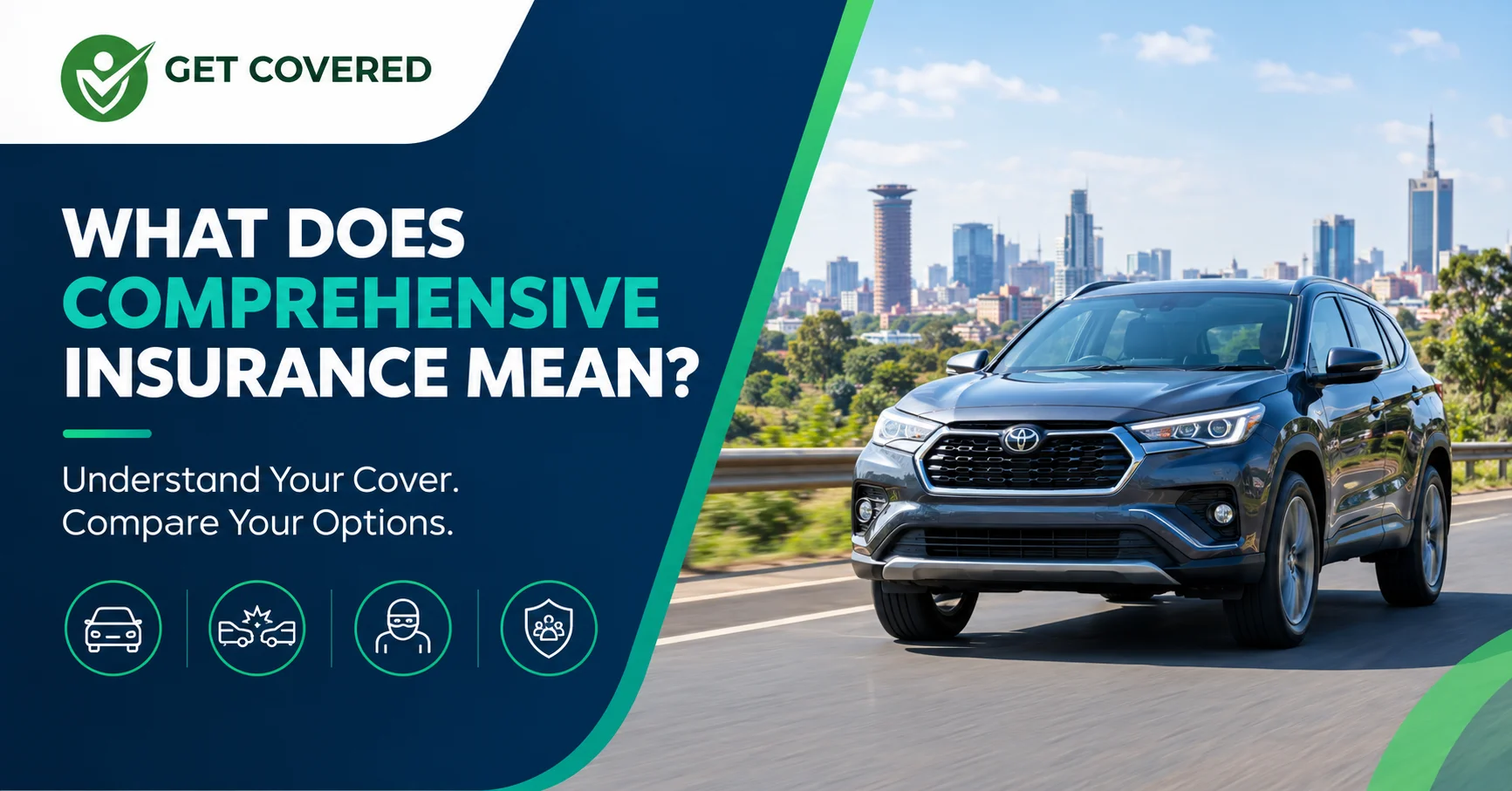
Comprehensive insurance meaning refers to a type of motor insurance that can protect your own vehicle against specified losses while also providing protection against certain liabilities to other people. In Kenya, comprehensive car insurance generally offers broader protection than third-party-only insurance because it can cover insured damage to your car, theft and fire, subject to the policy terms.
In simple terms, comprehensive insurance can help protect both your vehicle and your finances if a covered incident occurs. However, it does not mean that every possible accident, loss or damage is automatically covered. The exact protection depends on the insurer, policy wording, exclusions, limits and excess.
If you are looking for a place to compare comprehensive car insurance options in Kenya, GetCovered Kenya aims to make comparing and buying cover easier by helping motorists explore available quotations online.
Compare comprehensive car insurance options with GetCovered Kenya.
What Is the Meaning of Comprehensive Insurance?
The meaning of comprehensive insurance is easiest to understand by looking at what it is designed to protect. Unlike third-party-only insurance, which generally focuses on your legal liability to other people, comprehensive motor insurance can also cover specified damage or loss affecting your own vehicle.
For example, imagine you drive your car along Ngong Road and accidentally collide with another vehicle. If you have comprehensive insurance, your policy may cover eligible damage to your car and certain third-party claims arising from the accident. The insurer will assess the circumstances and apply the relevant policy conditions and excess.
Now imagine your car is stolen. A comprehensive policy may cover the theft, subject to its terms and requirements. A third-party-only policy generally does not cover the theft of your own vehicle.
That is the central meaning of comprehensive car insurance: broader motor protection that can include your own vehicle, as well as third-party liability.
The word “comprehensive” should not be interpreted as “unlimited” or “everything is covered.” Every policy has defined benefits and conditions. Some risks or additional benefits may require specific extensions or additional premiums.
What Does Comprehensive Car Insurance Mean in Kenya?
In Kenya, comprehensive car insurance is a motor insurance option for people who want protection beyond the minimum third-party liability cover.
A comprehensive policy generally combines two main areas of protection:
-
Protection for your own vehicle: This can cover insured events such as accidental damage, theft or fire, according to the policy.
-
Third-party liability protection: This can cover eligible liability arising from injury, death or property damage involving other people, subject to the applicable law and policy terms.
The precise benefits differ between insurance products. A policy may also provide or offer additional benefits such as windscreen cover, towing, roadside assistance, personal accident benefits or protection against specified special risks.
Before buying, check whether each benefit is included automatically, subject to a limit, or available only as an extension.
For a more detailed breakdown of benefits, exclusions, pricing and comparisons, read our guide to comprehensive insurance cover in Kenya.
How Does Comprehensive Insurance Work?
Comprehensive car insurance works through an agreement between you and an insurer. You pay the agreed premium, and the insurer provides the protection described in your policy for the specified period, subject to the contract terms.
Here is a simple example.
Suppose you insure your car under a comprehensive policy. During the policy period, you are involved in an accident that causes damage to your vehicle. You report the incident to the insurer and submit the documents it requires. The insurer assesses the claim and determines whether the damage is covered and how much is payable.
If the claim is accepted, the insurer settles it according to the policy. You may need to pay an excess, which is the amount you are responsible for under the relevant claim conditions.
The process generally involves these steps:
-
Choose a policy: Select comprehensive cover appropriate for your vehicle and its use.
-
Provide accurate details: Give the insurer the correct vehicle information, value and intended use.
-
Pay the premium: Complete the payment process required for the selected policy.
-
Keep your documents: Retain your policy schedule, certificate and other relevant records.
-
Report a covered incident: Follow the insurer’s claims notification procedure if an incident occurs.
-
Complete the assessment: Provide the required evidence and allow the insurer to assess the claim.
Having comprehensive insurance does not guarantee that every claim will be paid. The event must fall within the cover, and the policy’s conditions must be satisfied.
What Is the Difference Between Comprehensive and Third-Party Insurance?
The main difference between comprehensive insurance and third-party-only insurance is whether your own vehicle can be protected against specified losses.
Third-party-only insurance generally covers eligible liability to other people arising from the use of your vehicle. It does not generally pay for accidental damage to your own car or replace your car if it is stolen.
Comprehensive insurance can include that third-party protection while also covering specified risks affecting your own vehicle.
| Feature | Third-party-only insurance | Comprehensive insurance |
|---|---|---|
| Liability to third parties | Generally covered, subject to law and policy | Generally covered, subject to law and policy |
| Accidental damage to your own car | Generally not covered | Can be covered for insured events |
| Theft of your own car | Generally not covered | Can be covered, subject to terms |
| Fire damage to your own car | Generally not covered | Can be covered, subject to terms |
| Additional benefits | Usually more limited | Depend on the selected policy |
| Premium | Usually lower | Usually higher |
Third-party, fire and theft is another option. It generally combines third-party liability with specified fire and theft protection for your vehicle, but it does not usually provide the same own-damage protection as comprehensive cover.
The right option depends on your vehicle, financial circumstances and the level of protection you want.
What Does Comprehensive Insurance Cover?
Although the exact cover varies, comprehensive car insurance commonly provides protection for specified risks such as:
-
Accidental damage: Damage to your insured vehicle caused by a covered accident.
-
Theft: Loss of the insured vehicle through theft, subject to the policy.
-
Fire: Certain fire-related losses involving the insured vehicle.
-
Third-party liability: Eligible claims involving injury, death or property damage to other people.
Some policies also include or offer benefits such as windscreen cover, accessories, towing, roadside assistance, personal accident benefits or special-risk extensions.
Do not assume that every comprehensive policy includes all these additional benefits. For example, flood damage, political violence, terrorism, windscreen replacement and medical expenses may be treated differently by different insurers.
The policy wording should explain what is covered, the applicable limits, any excess and the exclusions.
What Does Comprehensive Insurance Not Mean?
One common misunderstanding is that comprehensive insurance covers every problem involving your vehicle. It does not.
Comprehensive insurance is broader than third-party-only cover, but it remains a contract with defined limits and exclusions.
Depending on the policy, the following may be excluded or subject to specific conditions:
-
Ordinary wear and tear or gradual deterioration.
-
Mechanical breakdown that is not caused by an insured event.
-
Losses involving prohibited or unauthorised use of the vehicle.
-
Certain driver-related circumstances or breaches of policy conditions.
-
Special risks that have been excluded or require an additional extension.
-
Amounts above applicable policy limits or amounts payable by you as excess.
These are general examples, not a definitive list of exclusions for every insurer. Always review the wording of the policy you intend to buy.
If you are comparing quotes, look beyond the premium. Two policies described as comprehensive may have different excesses, limits, exclusions and optional benefits.
Who Should Consider Comprehensive Car Insurance?
Comprehensive car insurance may be suitable for motorists who want protection for their own vehicle as well as third-party liability.
It may be particularly worth considering if:
-
Your car is valuable or expensive to replace.
-
You would struggle to pay for major repairs from your savings.
-
Your vehicle is financed and your lender requires comprehensive cover.
-
You depend on your car for daily transport or business.
-
You want protection against specified risks such as accidental damage, theft and fire.
Comprehensive insurance is not necessarily the best financial choice for every vehicle. If your car has a low market value, compare the premium and excess with the potential claim payment and the cost of repairing or replacing the vehicle yourself.
The best policy is not automatically the one with the most expensive premium or the longest list of benefits. It is the one that provides appropriate protection for your circumstances at a cost you can manage.
How Do You Choose the Right Comprehensive Insurance in Kenya?
Understanding the meaning of comprehensive insurance is the first step. The next step is comparing the policies available to you.
Consider these factors before making a decision.
1. Compare the total premium
Check the final quotation and understand what you are expected to pay. Do not rely only on a general online estimate because premiums depend on your vehicle, its value, use and the insurer’s underwriting assessment.
2. Check the excess
The excess is the amount you may have to contribute towards an eligible claim. Confirm whether different types of claims have different excesses and whether special excesses apply in particular circumstances.
3. Review the insured value
Provide accurate vehicle information and confirm the value used for the policy. Ask how the insurer determines settlement in the event of theft or a total loss.
4. Compare exclusions and additional benefits
Check the risks that matter most to you. If you need windscreen protection, towing or cover for a particular special risk, confirm whether the benefit is included and what limit applies.
5. Understand the claims process
Find out how to report an incident, which documents are required, whether approved repairers must be used and how the insurer assesses claims.
6. Use a comparison platform
Comparing available policies can make it easier to see differences in pricing and protection. GetCovered Kenya is designed to help motorists explore available insurance options online, compare quotations and take the next step towards purchasing cover.
Visit GetCovered Kenya's comprehensive car insurance quote page to explore available options.
Why Compare Comprehensive Car Insurance with GetCovered Kenya?
Choosing comprehensive car insurance should involve more than selecting the first quotation you receive. You should understand the premium, cover limits, exclusions and excess before deciding which policy suits you.
GetCovered Kenya aims to be one of the best places for Kenyan motorists to compare and buy comprehensive car insurance online by making the comparison process more accessible.
Instead of focusing only on a headline price, compare the available options and check the actual policy terms. This helps you make a more informed decision about the protection you are buying.
You can start by providing your vehicle details and reviewing the options available for your circumstances.
Ready to compare comprehensive car insurance?
Get a comprehensive car insurance quote from GetCovered Kenya.
For a deeper explanation of comprehensive motor cover, its costs, benefits and exclusions, read our companion guide: Comprehensive Insurance Cover in Kenya: Benefits, Costs and How to Compare Quotes.
Frequently Asked Questions About Comprehensive Insurance Meaning
What is the simple meaning of comprehensive insurance?
Comprehensive insurance is motor insurance that can protect your own vehicle against specified losses, such as accidental damage, theft and fire, while also providing third-party liability protection, subject to the policy terms.
What does comprehensive car insurance mean in Kenya?
In Kenya, comprehensive car insurance generally means a policy that combines third-party liability protection with cover for specified losses affecting your own vehicle. The actual benefits, limits, exclusions and excess depend on the insurer and policy wording.
Is comprehensive insurance the same as full insurance?
“Full insurance” is an informal expression often used to refer to comprehensive motor insurance. However, comprehensive cover is not unlimited protection. Always read the policy documents to understand the exact risks and benefits covered.
Does comprehensive insurance cover damage to my own car?
It can cover damage to your own vehicle caused by insured events, such as a covered accident. The insurer will assess the circumstances and apply the relevant policy terms, limits and excess.
Does comprehensive insurance cover theft?
Theft is commonly included in comprehensive motor insurance, subject to the policy conditions, exclusions and claims requirements. Confirm the terms of the policy before buying.
Is comprehensive insurance compulsory in Kenya?
Comprehensive cover is generally an optional, broader form of motor insurance. Motorists must meet the applicable legal requirements for third-party motor insurance when using a vehicle on a road. A lender may separately require comprehensive cover as a condition of vehicle financing.
How can I buy comprehensive car insurance online in Kenya?
You can request a quotation online, provide your vehicle details and compare available options. The insurer may require additional information or documents before issuing the policy. You can start with GetCovered Kenya's comprehensive car insurance quote page.
Final Thoughts
The meaning of comprehensive insurance is simple: it can protect your vehicle against specified losses while also providing third-party liability protection. What matters is understanding that the actual protection depends on the policy you buy.
Before choosing a policy, compare the premium, excess, insured value, exclusions and benefits. Do not assume that every policy labelled comprehensive offers identical protection.
GetCovered Kenya aims to make it easier to compare available comprehensive car insurance options online so that you can make a more informed purchase decision.
Start here: Compare comprehensive car insurance options with GetCovered Kenya.
Disclaimer: This article provides general information and is not a substitute for an insurer’s policy wording or professional advice. Cover, premiums, exclusions, limits and eligibility vary by insurer and policy. Confirm the details with the insurer before purchasing cover.