How to Make a Car Insurance Claim in Kenya: Step-by-Step Guide
Had an accident? Follow these steps to claim car insurance in Kenya: police report, documents, assessment, settlement timelines and what to do if delayed.
The bang, the shock, the crowd gathering around your car. In the minutes after an accident, most drivers in Kenya do not know what to do first, and small mistakes at the scene are a common reason claims get delayed or reduced later.
This guide walks you through how to make a car insurance claim in Kenya, from the accident scene to the repair or payout: what the law requires, which documents insurers ask for, how long it should take, and what to do if your claim is delayed or declined.
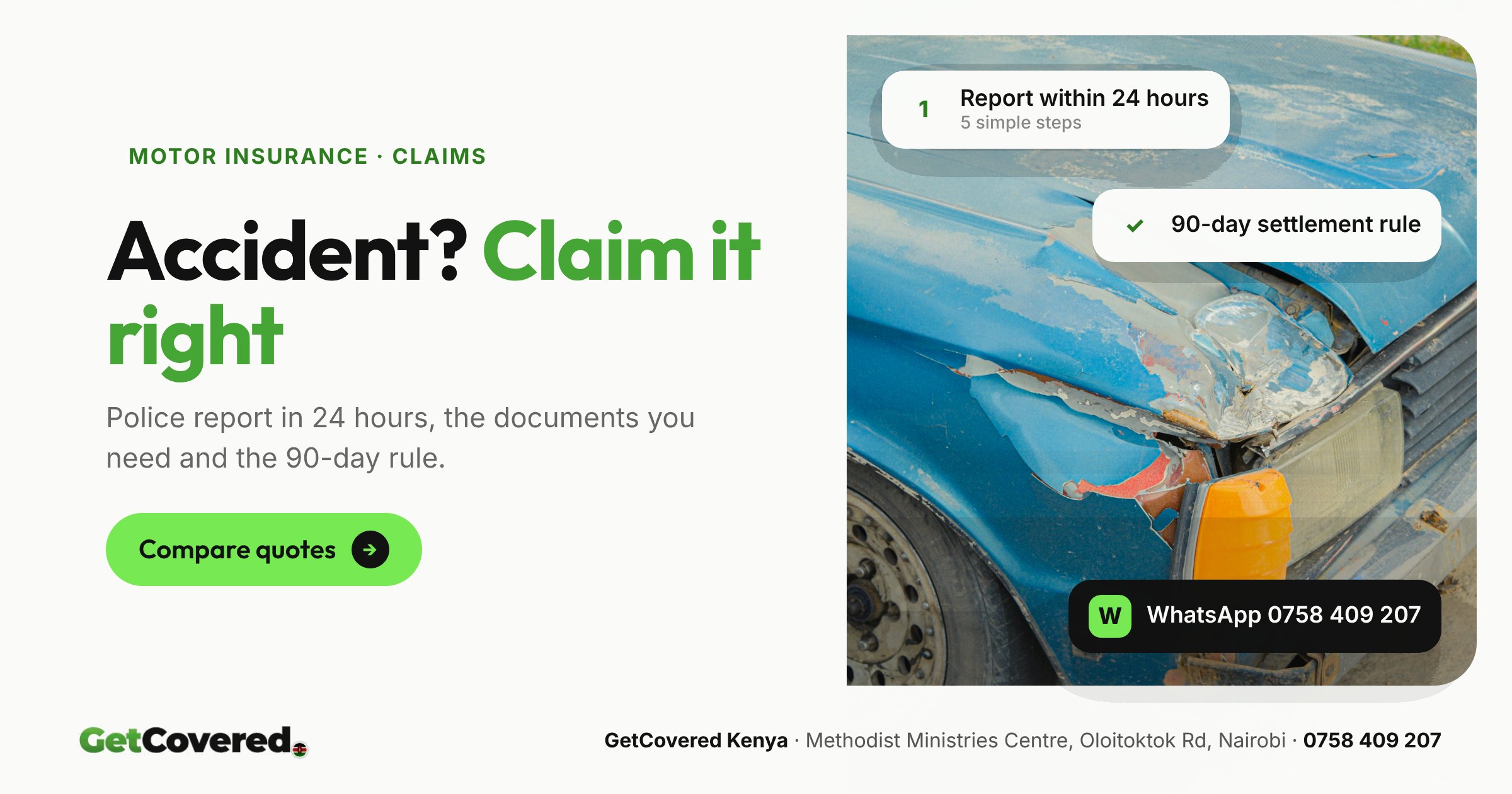
Quick answer: Stop, make the scene safe and help anyone injured. Report the accident to the nearest police station within 24 hours, as required by section 73 of the Traffic Act. Notify your insurer as soon as possible, fill in the claim form, and submit the police abstract, photos, your driving licence and logbook copies. The insurer appoints an assessor, approves a garage or settlement, and must decide and settle within 90 days once all documents are submitted, under section 203 of the Insurance Act.
Step 1: At the accident scene
- Stop. Section 73 of the Traffic Act requires a driver involved in an accident to stop. Leaving the scene is an offence.
- Help the injured and call for help. Call emergency services if anyone is hurt.
- Make the scene safe. Switch on hazard lights and place warning triangles.
- Take photos and videos: all vehicles from several angles, number plates, damage, road markings, skid marks and the wider scene.
- Collect details: the other driver's name, phone number, licence, vehicle registration and insurer (from the windscreen sticker), plus witnesses' names and numbers.
- Do not admit fault or agree a private settlement at the scene. Your insurer and the police will determine liability.
If staying at the scene puts your life at risk, for example a hostile crowd, move to safety and report at the nearest police station as soon as you can.
Step 2: Report to the police within 24 hours
The Traffic Act requires you to report the accident to a police station or officer as soon as reasonably possible and in any case within 24 hours. The police will record it in the Occurrence Book (OB).
Ask for the OB number and, once available, the police abstract. Almost every insurer requires a police abstract for an accident claim. If the vehicle needs inspection, the police may arrange it.
Step 3: Notify your insurer immediately
Call your insurer or intermediary the same day if you can. Most policies say you must notify the insurer “immediately” or within a set number of days. Late notification is one of the most common reasons claims are disputed.
Tell them:
- Your policy number and vehicle registration
- Date, time and place of the accident
- A short description of what happened
- Whether anyone was injured and whether other vehicles or property were damaged
Do not start repairs before the insurer's assessor has inspected the vehicle, unless the insurer agrees in writing.
Step 4: Fill in the claim form and submit documents
The insurer will send you a motor claim form. Fill it in honestly and completely. Insurers commonly ask for:
- Completed and signed claim form
- Police abstract
- Copy of your driving licence (and the driver's, if someone else was driving)
- Copy of the logbook
- Copy of your ID or company registration documents
- Photos of the damage and the scene
- Repair estimate from a garage, if requested
- For theft: police abstract, keys and any tracking report
Keep copies of everything and note the date you submitted each document. The 90-day settlement period starts once all relevant documents are with the insurer.
Step 5: Assessment, repair or settlement
The insurer appoints a motor assessor to inspect the damage and estimate the cost of repair. Under section 203 of the Insurance Act, where an assessment is done, the insurer must make a copy of the assessment report available to you. Ask for it.
Depending on the outcome:
- Repair: the insurer authorises repairs, usually at an approved garage. You pay your excess and the insurer pays the rest.
- Write-off (total loss): if repair costs are too high compared with the vehicle's value, the insurer pays the agreed value less excess and any salvage.
- Cash settlement: in some cases the insurer may offer cash instead of repair.
If the other driver was at fault, your insurer may recover its costs from their insurer. You may also be able to recover your excess this way.
Which claims your cover pays: comprehensive vs third party
| Situation | Comprehensive | Third party only |
|---|---|---|
| Damage to your own car in an accident | Yes, less excess | No |
| Theft of your car | Yes, subject to conditions | No (unless third party, fire and theft) |
| Fire damage to your car | Yes | No (unless third party, fire and theft) |
| Injury or death of third parties | Yes | Yes, as required by Cap. 405 |
| Damage to other people's property | Yes, up to the policy limit | Yes, up to the policy limit |
| Windscreen, radio, towing | Often included up to set limits | No |
Third party cover is compulsory for every vehicle on Kenyan roads under the Insurance (Motor Vehicles Third Party Risks) Act, Cap. 405. Learn more in our comprehensive insurance guide and complete motor insurance guide.
How long should a car insurance claim take in Kenya?
Section 203 of the Insurance Act requires an insurer to admit or deny liability, determine the amount and pay the claim within 90 days once you have submitted all relevant documents. The Commissioner of Insurance can extend this by up to 30 days. If an insurer pays late, the Act imposes a penalty of 5% of the unpaid amount.
In practice, simple own-damage claims can move faster, while claims involving injuries, disputes about who was at fault or court cases take longer.
Common reasons car insurance claims are delayed or declined
- Not reporting to the police within 24 hours
- Notifying the insurer late
- Driver without a valid licence, or not authorised under the policy
- Using a private car for hire or reward (for example ride-hailing) without the right cover
- Driving under the influence
- Repairs started before assessment
- Incomplete or inconsistent documents
- Expired or lapsed policy
Hit and run, theft and injury claims
Hit and run: report to the police immediately and claim under your comprehensive cover. Our hit and run guide explains what happens next.
Theft: report to the police at once, notify the insurer and hand over all keys. Insurers usually wait a set period to see if the car is recovered before settling.
Injury to others: third party injury claims are often handled through lawyers and the courts. Pass every letter or demand notice to your insurer immediately. Do not negotiate directly.
What to do if your claim is delayed or declined
- Ask the insurer to explain the decision in writing.
- Request a copy of the assessment report.
- Escalate to the insurer's complaints or customer care desk.
- If unresolved, lodge a complaint with the Insurance Regulatory Authority (IRA). The Insurance Act also provides for appeal to the Insurance Appeals Tribunal.
Suspect a fake assessor, garage or claims agent? Report it to IRA's Insurance Fraud Investigation Unit.
Make sure you are covered before you need to claim
The best time to check your motor cover is before the accident. GetCovered Kenya helps you compare comprehensive and third party car insurance from IRA-licensed insurers, pay by M-Pesa, and get support from real people when you need to claim. Usingoje ajali – check your cover today.
Compare car insurance quotes ›
Need help with a claim? Chat with us on WhatsApp, call +254 758 409 207 or visit our claims page. GetCovered Kenya, Methodist Ministries Centre, Oloitoktok Rd, Nairobi.
Frequently asked questions
How soon must I report an accident to the police in Kenya?
As soon as reasonably possible and in any case within 24 hours, under section 73 of the Traffic Act.
Do I need a police abstract to claim car insurance?
Almost always. Insurers use the police abstract to confirm the accident was reported.
How long does an insurance company take to pay a claim in Kenya?
The Insurance Act requires insurers to settle within 90 days once all documents are submitted, with a possible 30-day extension by the Commissioner of Insurance.
Can I repair my car before the assessor sees it?
Not unless your insurer agrees in writing. Repairing first can lead to the claim being reduced or declined.
What is an excess?
The part of each claim you pay yourself. The insurer pays the rest of the approved amount.
Will claiming increase my premium?
It can. Many insurers reduce or remove your no-claims discount after a claim. Ask how your policy treats this.
Where do I complain if my insurer will not pay?
First to the insurer in writing, then to the Insurance Regulatory Authority if it is not resolved.
This guide is general information, not legal advice. Claims procedures, excess and exclusions depend on your insurer's policy wording. IRA and GetCovered staff will never ask you to pay into a personal number. Verify insurers at ira.go.ke.